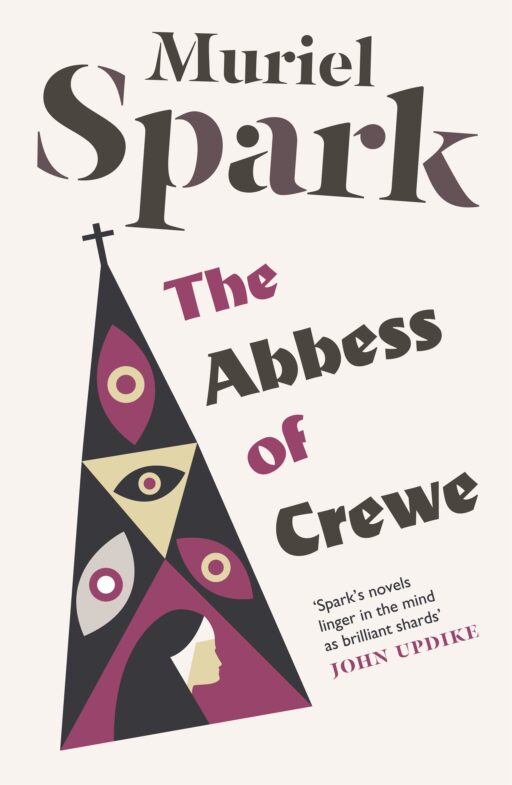
The Abbess of Crewe
- 3 Dec 2015
- 9781782117612
- £5.59
- 112 pp
In a few words
Muriel Spark’s sharp, surreal post-Watergate satire, set around the corrupt elections at an English convent

You don't need to know of the Watergate Scandal to enjoy the book as Spark creates one of her most Machiavellian female leads in The Abbess of Crewe and a wonderful cast of cloaked characters around her . . . There are some wonderful set pieces . . . There was a lot of very wicked laughter for me throughout The Abbess of Crewe and it had some of my most favourite characters Spark has created so far in my reading of her. I also think it is one where her wicked sense of humour, which I love so much, shines through most devilishly
Simon Savidge
Savidge ReadsThe short dirk in the hands of Muriel Spark has always been a deadly weapon and never more so than in The Abbess of Crewe
More about
the book
The Abbess of Crewe displays the best of Sparkian satire, placing her at the heart of a great literary tradition alongside Waugh and Trollope, Wilde and Wodehouse. It demands rediscovery.
The Abbess of Crewe is Muriel Spark’s razor sharp, wickedly humorous and surreal satire of a real life political scandal – reimagined within the claustrophobic walls of a convent. A steely, Machiavellian nun, secret surveillance, corruption, cloak-and-dagger plotting, rivalries and a rigged election all send the wonderful cast of characters into disarray as a chain of events unfold that become weirder and weirder.
My admiration for Spark's contribution to world literature knows no bounds. She was peerless, sparkling, inventive and intelligent - the crème de la crème
Ian Rankin
Muriel Spark's novels linger in the mind as brilliant shards, decisive as a smashed glass is decisive
John Updike
New YorkerThe care with which she uses words is matched by a gloriously carefree attitude. It's all part of her sanity, her breezy authorial self-confidence; and because of this I think that reading a blast of her prose every morning is a far more restorative way to start a day than a shot of espresso
A wholly original presence in modern literature
Andrew Motion
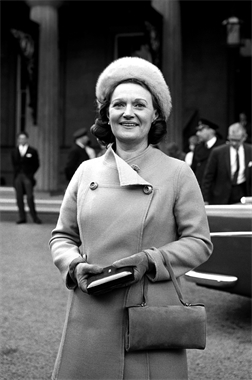
Muriel Spark
View profileMuriel Spark, DBE, C.Litt., was born in Edinburgh in 1918 and educated in Scotland. A poet and novelist, she is most well known for The Prime of Miss Jean Brodie. She also wrote children’s books, radio plays, the comedy Doctors of Philosophy and biographies of nineteenth-century literary figures, including Mary Shelley and Emily Brontë. Muriel Spark has garnered international praise and many awards, including the David Cohen Prize for Literature, the Ingersoll T.S. Eliot Award, the James Tait Black Memorial Prize, the Boccaccio Prize for European Literature, the Gold Pen Award, the first Enlightenment Award and the Italia Prize for dramatic radio. She died in 2006.