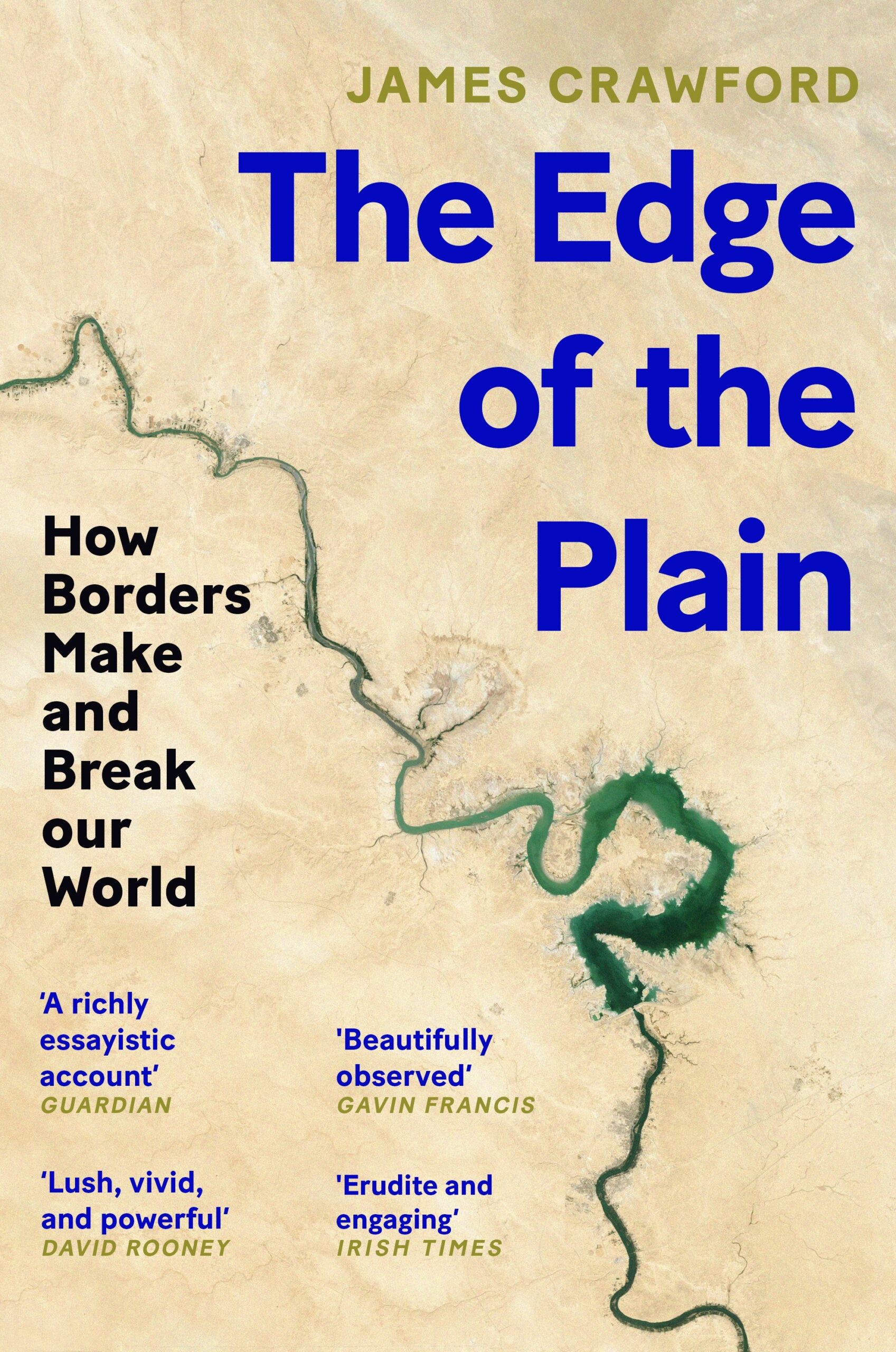
The Edge of the Plain How Borders Make and Break Our World
- 4 Aug 2022
- 9781838852023
- £20
- 432 pp
- 162×240mm
- 3 Aug 2023
- 9781838852061
- £12.99
- 432 pp
- 129×198mm
- 4 Aug 2022
- 9781838852047
- £10.39
- 432 pp
- 4 Aug 2022
- 9781838852054
- £30
- 13 hrs 39 min



In a few words
Blending history, travel and reportage, this is a wide-ranging journey through the history of borders and an examination of their role in shaping our world today
In a few words
Blending history, travel and reportage, this is a wide-ranging journey through the history of borders and an examination of their role in shaping our world today
In a few words
Blending history, travel and reportage, this is a wide-ranging journey through the history of borders and an examination of their role in shaping our world today
In a few words
Blending history, travel and reportage, this is a wide-ranging journey through the history of borders and an examination of their role in shaping our world today


A richly essayistic account of how borders make and break our world, from Hadrian’s Wall to China’s Great Firewall
The borders that mark our world are either ineffective, inhumane, or both. The Edge of the Plain asks us to envision alternatives
A richly essayistic account of how borders make and break our world, from Hadrian’s Wall to China’s Great Firewall
The borders that mark our world are either ineffective, inhumane, or both. The Edge of the Plain asks us to envision alternatives
A richly essayistic account of how borders make and break our world, from Hadrian’s Wall to China’s Great Firewall
The borders that mark our world are either ineffective, inhumane, or both. The Edge of the Plain asks us to envision alternatives
A richly essayistic account of how borders make and break our world, from Hadrian’s Wall to China’s Great Firewall
The borders that mark our world are either ineffective, inhumane, or both. The Edge of the Plain asks us to envision alternatives
More about
the book
SHORTLISTED FOR SCOTLAND’S NATIONAL NON-FICTION BOOK AWARD 2023
Today, there are more borders in the world than ever before in human history.
In this book James Crawford argues that our enduring obsession with borders has brought us to a crisis point: that we are entering the endgame of a process that began thousands of years ago, when we first started dividing up the earth.
Beginning with the earliest known marker which denoted the end of one land and the beginning of the next, Crawford follows the story of borders into our fragile and uncertain future – towards the virtual frontiers of the internet, and the shifting geography of a world beset by climate change. In the process, he travels to many borders old and new: from a melting border high in the glacial landscapes of the Austrian-Italian Alps to the only place on land where Europe and Africa meet; from the artist Banksy’s ‘Walled Off Hotel’ in the conflict-torn West Bank to the Sonoran Desert and the fault lines of the US/Mexico border.
Combining history, travel and reportage, The Edge of the Plain explores how borders have grown and evolved to take control of our landscapes, our memories, our identities and our destinies. As nationalism, climate change, globalisation, technology and mass migration all collide with ever-hardening borders, something has to give. And Crawford asks, is it time to let go of the lines that divide us?
More about
the book
SHORTLISTED FOR SCOTLAND’S NATIONAL NON-FICTION BOOK AWARD 2023
No matter where you turn, it seems that the taut lines of borders are vibrating to – or even calling – the tune of global events
Today, there are more borders in the world than ever before in human history. Beginning with the earliest known example, Crawford travels to many borders old and new: from a melting glacial landscape to the conflict-torn West Bank and the fault-lines of the US/Mexico border. He follows the story of borders into our fragile and uncertain future – towards the virtual frontiers of the internet and the shifting geography of a world beset by climate change.
As nationalism, climate change, globalisation, technology and mass migration all collide with ever-hardening borders, something has to give. And Crawford asks, is it time to let go of the lines that divide us?
More about
the book
SHORTLISTED FOR SCOTLAND’S NATIONAL NON-FICTION BOOK AWARD 2023
No matter where you turn, it seems that the taut lines of borders are vibrating to – or even calling – the tune of global events
Today, there are more borders in the world than ever before in human history. Beginning with the earliest known example, Crawford travels to many borders old and new: from a melting glacial landscape to the conflict-torn West Bank and the fault-lines of the US/Mexico border. He follows the story of borders into our fragile and uncertain future – towards the virtual frontiers of the internet and the shifting geography of a world beset by climate change.
As nationalism, climate change, globalisation, technology and mass migration all collide with ever-hardening borders, something has to give. And Crawford asks, is it time to let go of the lines that divide us?
More about
the book
SHORTLISTED FOR SCOTLAND’S NATIONAL NON-FICTION BOOK AWARD 2023
Today, there are more borders in the world than ever before in human history. In this book James Crawford argues that our enduring obsession with borders has brought us to a crisis point: that we are entering the endgame of a process that began thousands of years ago, when we first started dividing up the earth.
Beginning with the earliest known marker which denoted the end of one land and the beginning of the next, James follows the story of borders into our fragile and uncertain future – towards the virtual frontiers of the internet, and the shifting geography of a world beset by climate change. In the process, he travels to many borders old and new: from a melting border high in the glacial landscapes of the Austrian-Italian Alps to the only place on land where Europe and Africa meet; from the artist Banksy’s ‘Walled Off Hotel’ in the conflict-torn West Bank to the Sonoran Desert and the fault lines of the US/Mexico border.
Combining history, travel and reportage, The Edge of the Plain explores how borders have grown and evolved to take control of our landscapes, our memories, our identities and our destinies. As nationalism, climate change, globalisation, technology and mass migration all collide with ever-hardening borders, something has to give. Can we let go of the lines that separate us? Or are we fated to repeat the mistakes of the past, as our angry, warming and segregated planet lurches towards catastrophe?
Erudite and engaging . . . [A] fine book
Why do lines on a map hold such power over humanity? Will we ever do away with them? These are some of the questions pondered - and answered - by James Crawford. Fascinating
Fascinating
Nihal Arthanayake
BBC R5[A] lyrical tour of borders in the past and the present . . . Crawford is at his best when surrendering to his propensity for reverie, an irrepressible, almost romantic sense of wonder that drives the reader from chapter to chapter
Erudite and engaging . . . [A] fine book
Why do lines on a map hold such power over humanity? Will we ever do away with them? These are some of the questions pondered - and answered - by James Crawford. Fascinating
Fascinating
Nihal Arthanayake
BBC R5[A] lyrical tour of borders in the past and the present . . . Crawford is at his best when surrendering to his propensity for reverie, an irrepressible, almost romantic sense of wonder that drives the reader from chapter to chapter
Erudite and engaging . . . [A] fine book
Why do lines on a map hold such power over humanity? Will we ever do away with them? These are some of the questions pondered - and answered - by James Crawford. Fascinating
Fascinating
Nihal Arthanayake
BBC R5[A] lyrical tour of borders in the past and the present . . . Crawford is at his best when surrendering to his propensity for reverie, an irrepressible, almost romantic sense of wonder that drives the reader from chapter to chapter
Erudite and engaging . . . [A] fine book
Why do lines on a map hold such power over humanity? Will we ever do away with them? These are some of the questions pondered - and answered - by James Crawford. Fascinating
Fascinating
Nihal Arthanayake
BBC R5[A] lyrical tour of borders in the past and the present . . . Crawford is at his best when surrendering to his propensity for reverie, an irrepressible, almost romantic sense of wonder that drives the reader from chapter to chapter

James Crawford
View profileJames Crawford is an acclaimed historian, publisher and broadcaster. Born in Shetland in 1978, he studied History and Philosophy of Law at the University of Edinburgh, winning the Lord President Cooper Memorial Prize, and for over a decade he worked for and researched Scotland’s National Collection of architecture and archaeology. He is the author of Fallen Glory: The Lives and Deaths of the World’s Greatest Lost Buildings, which was shortlisted for best non-fiction book at the Saltire Literary Awards, and he has scripted and presented three series of the landmark BBC One documentary Scotland from the Sky. In 2019 he was named as the first-ever Scottish ambassador for the UK Archive and Records Association’s ‘Explore Your Archives’ campaign. He lives in Edinburgh.
@Jdcrawf | jamescrawford.space
James Crawford
View profileJames Crawford is an acclaimed historian, publisher and broadcaster. Born in Shetland in 1978, he studied History and Philosophy of Law at the University of Edinburgh, winning the Lord President Cooper Memorial Prize, and for over a decade he worked for and researched Scotland’s National Collection of architecture and archaeology. He is the author of Fallen Glory: The Lives and Deaths of the World’s Greatest Lost Buildings, which was shortlisted for best non-fiction book at the Saltire Literary Awards, and he has scripted and presented three series of the landmark BBC One documentary Scotland from the Sky. In 2019 he was named as the first-ever Scottish ambassador for the UK Archive and Records Association’s ‘Explore Your Archives’ campaign. He lives in Edinburgh.
@Jdcrawf | jamescrawford.space
James Crawford
View profileJames Crawford is an acclaimed historian, publisher and broadcaster. Born in Shetland in 1978, he studied History and Philosophy of Law at the University of Edinburgh, winning the Lord President Cooper Memorial Prize, and for over a decade he worked for and researched Scotland’s National Collection of architecture and archaeology. He is the author of Fallen Glory: The Lives and Deaths of the World’s Greatest Lost Buildings,which was shortlisted for best non-fiction book at the Saltire Literary Awards, and he has scripted and presented three series of the landmark BBC One documentary Scotland from the Sky. In 2019 he was named as the first-ever Scottish ambassador for the UK Archive and Records Association’s ‘Explore Your Archives’ campaign. He lives in Edinburgh.
@Jdcrawf | jamescrawford.space
James Crawford
View profileJames Crawford is an acclaimed historian, publisher and broadcaster. Born in Shetland in 1978, he studied History and Philosophy of Law at the University of Edinburgh, winning the Lord President Cooper Memorial Prize, and for over a decade he worked for and researched Scotland’s National Collection of architecture and archaeology. He is the author of Fallen Glory: The Lives and Deaths of the World’s Greatest Lost Buildings, which was shortlisted for best non-fiction book at the Saltire Literary Awards, and he has scripted and presented three series of the landmark BBC One documentary Scotland from the Sky. In 2019 he was named as the first-ever Scottish ambassador for the UK Archive and Records Association’s ‘Explore Your Archives’ campaign. He lives in Edinburgh.
@Jdcrawf | jamescrawford.space