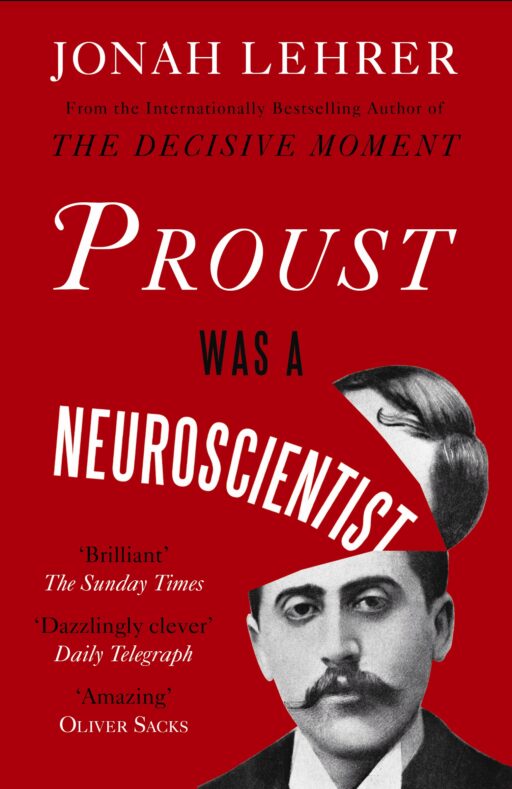
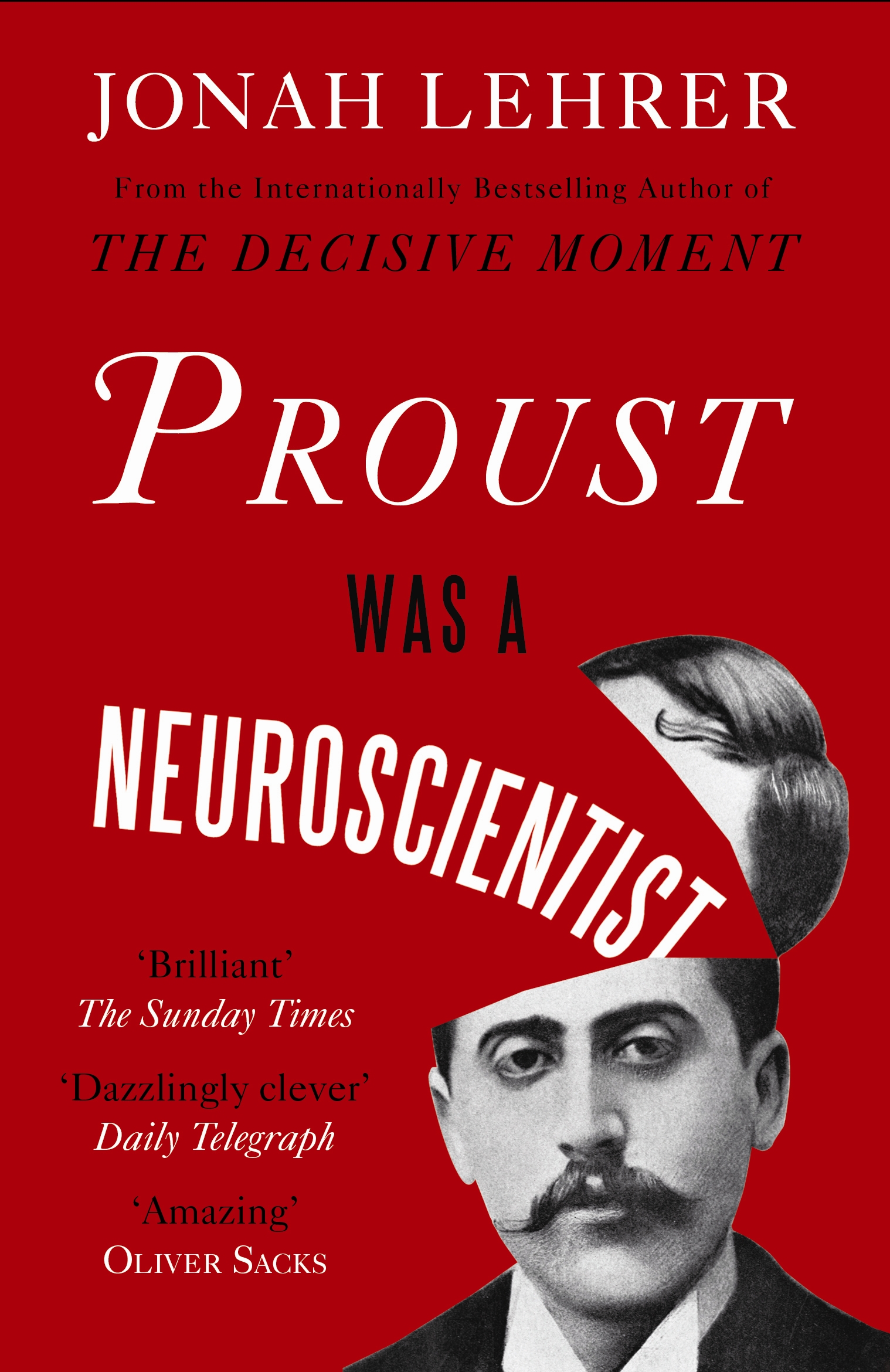
Proust Was a Neuroscientist
- 19 Apr 2012
- 9780857862310
- £10.99
- 256 pp
- 129×198mm
- 3 Feb 2011
- 9780857860422
- £8.79
- 256 pp
In a few words
An illuminating and unusual book about how famous artists have anticipated the discoveries of neuroscience.
In a few words
An illuminating and unusual book about how famous artists have anticipated the discoveries of neuroscience.
‘Marks the arrival of an important new thinker, who finds in the science and the arts wonder and beauty, and with equal confidence says wise and fresh things about both.’ Los Angeles Times Book Review

If all science books were as successful in bridging the divide between art and science as this one is, there would no longer be a divide to bridge.
Christopher Potter
Sunday TimesIn this amazing first book [Lehrer] bridges 'the two cultures' with ease and grace. His clear and vivid writing - incisive and thoughtful, yet sensitive and modest - is a special pleasure.
In this amazing first book [Lehrer] bridges 'the two cultures' with ease and grace. His clear and vivid writing - incisive and thoughtful, yet sensitive and modest - is a special pleasure.
A slim, brainy book about the brain, modernist art, and literature . . . Lehrer writes skillfully and coherently about both art and science - no small feat.
More about
the book
Is science the only path to knowledge?
In this sparkling and provocative book, Jonah Lehrer explains that when it comes to understanding the brain, art got there first. Taking a group of celebrated writers, painters and composers, Lehrer shows us how artists have discovered truths about the human mind – real, tangible truths – that science is only now rediscovering. We learn, for example, how Proust first revealed the fallibility of memory; how George Eliot understood the brain’s malleability; how the French chef Escoffier intuited umami (the fifth taste); how Cézanne worked out the subtleties of vision; and how Virginia Woolf pierced the mysteries of consciousness. It’s a riveting tale of art trumping science again and again.
More about
the book
Is science the only path to knowledge?
In this sparkling and provocative book Jonah Lehrer, author of The Decisive Moment, explains that when it comes to understanding the brain, art got there first. Taking a group of celebrated writers, painters and composers, Lehrer shows us how artists have discovered truths about the human mind – real, tangible truths – that science is only now rediscovering.
We learn, for example, how Proust first revealed the fallibility of memory; how George Eliot understood the brain’s malleable nature; how the French chef Escoffier intuited umami (the fifth taste); how Cézanne worked out the subtleties of vision; and how Virginia Woolf pierced the mysteries of consciousness. It’s a riveting tale of art trumping science, again and again.
Still only in his mid-twenties, Lehrer is a dazzlingly clever young man whose writing bears witness to both the clarity of his scientific training and the humanity of his literary studies. The Whitmanesque electricity of all the thought and heart he has put into this book fizzes from each sentence.
There is more content here than in many books three times as long . . . I've heard it said that we live in a golden age as far as science writing is concerned. I've no idea, but I do know a golden book when one bumps into me, and this is one.
A slim, brainy book about the brain, modernist art, and literature . . . Lehrer writes skillfully and coherently about both art and science - no small feat.
Lehrer is gifted with the ability to find philosophy in science and stray bits of science buried amid the rubble of literary history. He is less critic than armchair philosopher, searching for meaning anywhere great thinkers have left their footprints.
Lehrer is gifted with the ability to find philosophy in science and stray bits of science buried amid the rubble of literary history. He is less critic than armchair philosopher, searching for meaning anywhere great thinkers have left their footprints.
A precocious and engaging book that tries to mend the century-old tear between literary and scientific cultures . . . Lehrer is smart, and there are some fun moments in these pages.
In this fascinating and unusual book, Lehrer makes an insightful case for Art triumphing over Science . . . Lehrer takes the modern-day reader into the archives of literary history, pondering over the musings of poets, writers, artists and composers in order to prove his theory.
Still only in his mid-twenties, Lehrer is a dazzlingly clever young man whose writing bears witness to both the clarity of his scientific training and the humanity of his literary studies. The Whitmanesque electricity of all the thought and heart he has put into this book fizzes from each sentence.

Jonah Lehrer
View profileJonah Lehrer is editor at large for Seed magazine and the author of The Decisive Moment: How the Brain Makes Up Its Mind.
A graduate of Columbia University and a Rhodes Scholar at Oxford University, Lehrer has worked in the lab of Nobel Prize-winning neuroscientist Eric Kandel. He has written for the New Yorker, Boston Globe, Washington Post, NPR and New Scientist, and writes a highly regarded blog, The Frontal Cortex.