Death and the Dolce Vita The Dark Side of Rome in the 1950s
- 3 May 2012
- 9781847676559
- £12.99
- 416 pp
- 129×198mm

In a few words
The true story of Italy’s most infamous murder, and the scandal that rocked the country.
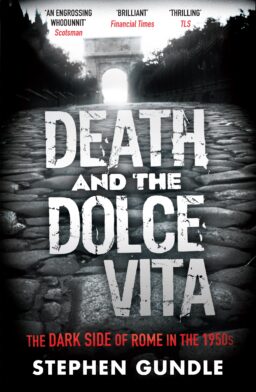

A brilliant, methodical investigation of a murder scandal that convulsed the Roman political and social establishment in the 1950s.
Death and the Dolce Vita, a hybrid of history and police detection, brilliantly recreates the details of the Montesi affair...as well as being a thriller, [it] provides an excellent account of the virtues and misdeeds of Europe's most foxy political class.
Ian Thompson
GuardianMore about
the book
On 9 April 1953 an attractive twenty-one-year-old woman went missing from her family home in Rome. Thirty-six hours later her body was found washed up on a neglected beach. Some said it was suicide; others, a tragic accident. But as the police tried to close the case, darker rumours bubbled to the surface. Could it be that the mysterious death of this quiet, conservative girl was linked to a drug-fuelled orgy, involving some of the richest and most powerful men in Italy?
The term "eroticism of detail" could have been made for this book . . . an intense, claustrophobic narrative of murder, mystery and scandal worthy of a Verdi opera . . . a page-turning narrative that explores its extraordinary characters and even more extraordinary cover-ups, evasions and dissemblage, reaching to the top of Italian political life.
This is microcosmic history at its most effective: Gundle finds big stories in the small print, teasing out the implications for city and nation of this darkly glamorous demi-monde of starlets and playboys, gossip columnists and - paparazzi.
Boyd Tonkin
IndependentGundle traces a path through the labyrinth of investigation, cover-up and conspiracy theory that followed to show how the peculiar death of a respectable, unassuming carpenter's daughter came to develop into one of the great scandals - and unsolved mysteries - of the Fifties.
What Gundle captures so magnificently is how the case shed light on the intersection between the stars of public life and the dark underbelly of post-war Rome.
Ben Felsenburg
Metro