About Climate action plan

Canongate’s environmental impact reflects the challenges of the industry and identifies three main sources of emissions in Manufacturing, Transport and Business travel.
In 2023, Canongate Books signed the Publisher’s Association Publishing Declares pledge. We committed to climate action by supporting efforts to limit global warming to 1.5°C, achieve net-zero carbon operations by 2050, work with partners to adopt greener materials and processes, and collaborate across the industry to share resources and tools.
Although we have made changes to both our internal operations and external practices, we recognise that these actions are only a starting point and that more needs to be done. We have begun measuring the greenhouse gas emissions associated with our own operations and with the key suppliers involved in the production of our physical books. However, we also recognise the need to develop a fuller understanding of the impacts across the downstream stages of our physical value chain, including sales to retailers and end-consumers, as well as across our digital distribution channels.
The publishing industry depends on a supply chain in which every stage from paper production, printing and manufacturing to global transportation, overproduction and waste presents significant environmental challenges.
Industry Context and Collaboration
For these reasons, Canongate is committed to reducing its environmental impact. Across the UK and internationally, organisations including BIC (Book Industry Communication), the Publishers Association, Intergraf, the International Publishers Association, the UN SDG Publishers Compact and the Green Book Alliance are encouraging members to measure and reduce emissions, while providing practical tools and guidance to support that work. The European Green Deal, which aims to make Europe climate-neutral by 2050, is also driving cross-sector collaboration worldwide through new market regulations and shared climate goals.
Greenhouse Gas emissions
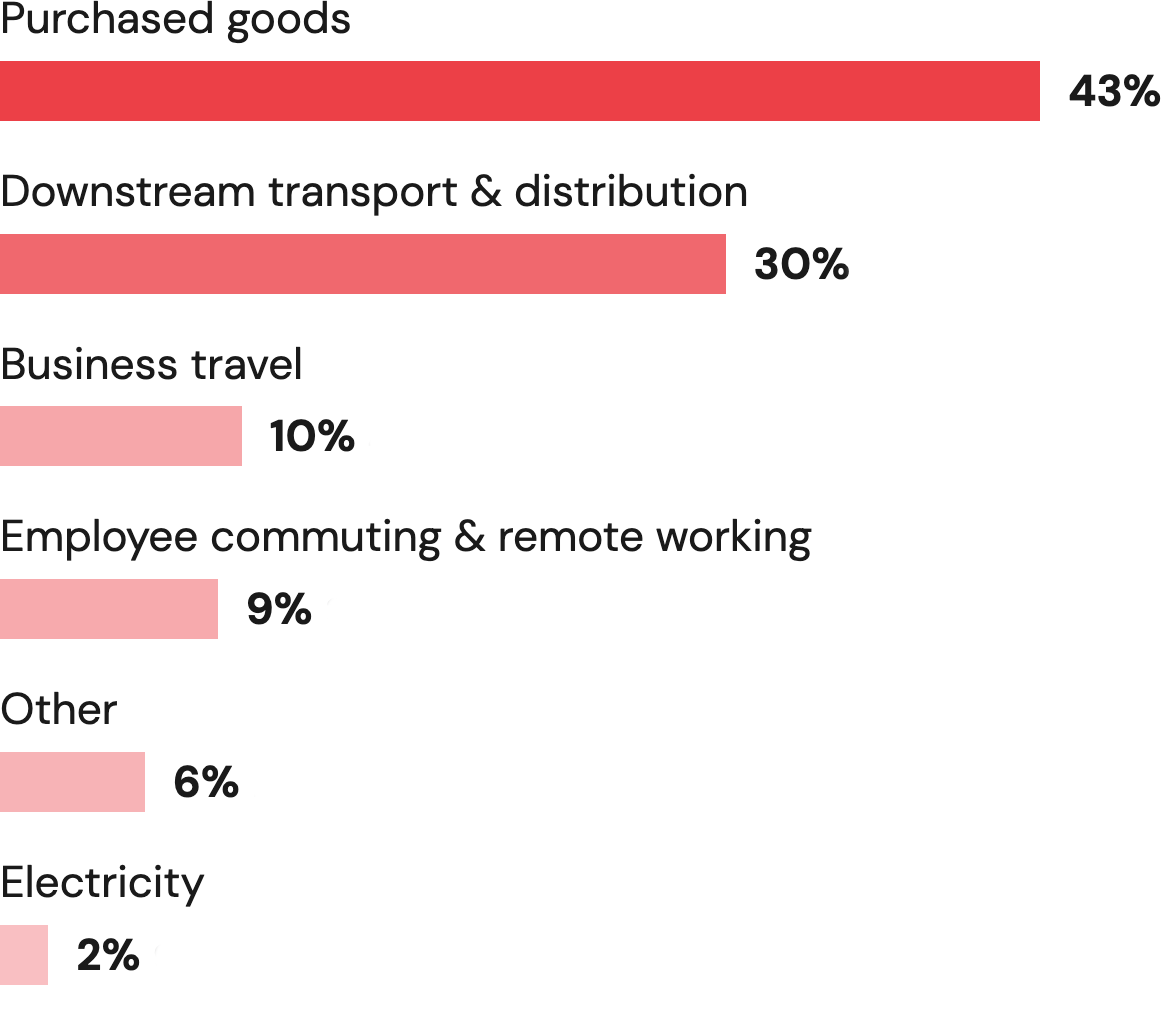
Canongate has estimated the split of Greenhouse Gas (“GHG”) emissions from its 2 offices and 5 largest tier 1 suppliers for the year ended 31 March 2026 using the Equipoise Advanced Business Carbon Calculator ©2025. This view has helped indicate where specific climate action can be taken.
Detailed Climate Action Plan
Manufacturing
New publications: carbon calculations to be in place in 2027
Introduce the use of GBA (Green Book Alliance) carbon calculator tool to measure the impact of different formats, weights and print runs of titles to be acquired.
Stakeholder engagement: Engage the Executive Board and Commercial team in the process and make emissions a factor in formatting decisions. Train production team in use of carbon calculator.
A Materials & Design Guide for colleague information on reducing the impact of materials to be by end 2027
Using an established guide, inform the marketing, design and production teams of materials and Design for Recycling methodology.
Stakeholder engagement: engage the teams in design for recycling principles for adoption in collaboration with the commercial requirements of book design.
Conduct a wastage in the supply chain audit by end 2028
We already have data from our major suppliers, but we will conduct a full audit through to and including the retailers.
Stakeholder engagement: Questionnaire detailing waste data from suppliers and retailers.
Expand colleague participation on Industry Sustainability Forums by end 2027
Expand current participation beyond current Operations Director by joining committees BIC’s Green Supply Chain, BIC’s Physical Supply Chain, PA’s Sustainability Taskforce and Publishing Scotland Environmental Sustainability Group.
Stakeholder engagement: Identify and engage colleagues appropriate to relevant committees.
100% of glue, ink and cover treatments to be recycled by 2028
These elements are already recycled in our non-colour books.
Stakeholder engagement: Encourage our colour books printers to recycle these production elements, or source compliant printers.
Transport & Distribution
Reduce waste by increasing Outreach by 100% by 2029
We currently donate overstocks to Bookaid International, Betterworld Books, Scottish Book Trust and Prison Fellowship Scotland.
Stakeholder engagement: Greater outreach to charitable organisations. Financial sign-off from Executive Board.
Add mileage & emissions to decision on Printer direct deliveries by end 2027
Factor in mileage and emissions alongside financial considerations.
Stakeholder engagement: Engage main printer in emissions calculations. Sales dept to add carbon emissions to their current calculation grid.
Eliminate office airfreighting and reduce customer airfreighting by 2029
We do very little airfreighting but want to eliminate it by enabling longer schedules or printing locally.
Stakeholder engagement: Customer communication and commitment internally to avoid airfreight.
Suppliers to use 100% renewable energy by 2030
Our main UK supplier uses 100% renewable energy, but others are working towards it.
Stakeholder engagement: Log schedules by supplier for 100% renewables.
UK printer to invest in next generation EV by 2030
Our major printer has committed to look again by 2030 at options for deliveries to Glasgow either for other transport options ie train or other vehicle fuel such as HVO to reduce emissions for deliveries.
Stakeholder engagement: Major printer/haulier investment
Business Travel
Offset all International flights by 2028
Research and implement a system for offsetting flights.
Stakeholder engagement: Conduct research into best offsetting scheme providers.
Provide information & process to Executive management team.
Other targets
More efficient water heating system in our owned office by Q3 2026
Sourced and scheduled.
Stakeholder engagement: Local supplier.
100% renewable energy in our owned office by 2027
As contracts expire, 100% renewable electricity suppliers are chosen from Good Energy, 100Green and Ecotricity.
Stakeholder engagement: Engage with suppliers for smart meters and information to identify high-use times and areas with a view to reduction.
All plastics to be collected from owned offices from 2027.
Facilitate collection by providing a dedicated collection point.
Stakeholder engagement: Remain aware of City of Edinburgh Council implementation and respond.
Sustainability Network of Colleagues to be in place in 2027
Commitment from an internal team of colleagues to keep sustainability on the daily agenda.
Stakeholder engagement: Ask for volunteers to form a network.
Measure World Shipping emissions by end 2027
Start a project to measure shipping of our books by foreign customers to their warehouses.
Stakeholder engagement: Shipping company emissions data.
Add motion sensor lighting to more areas in our owned office by 2028
Request estimates for further motion sensor lighting.
Stakeholder engagement: Ask colleagues for most useful areas to begin to phase in lighting.
Measure Digital Footprint by end 2029
Ebooks and Audio Digital Download and website creation to be measured and added to our existing emissions.
Stakeholder engagement: Audio & Digital and Digital Production Managers to provide data for a suitable carbon calculator.
Responsibility
Our Chief Executive Officer, Jamie Byng, is responsible for our Climate Action Plan.
Operational Execution
The Senior Leadership team holds responsibility for ensuring that the Climate Action Plan is executed effectively by their teams.

Print is sustainable. Our industry’s primary raw material, paper, is one of the few truly circular products. It does not need electricity to use after purchase and continues to store carbon throughout its lifetime. It is also one of the most recycled materials in the world. This goes for books. They are often reused and recycled.
Related policies
Our B Corp status
As part of our commitment to doing good in the world, in 2024 we became the first UK trade publisher to be certified as a B Corp.
Our suppliers
The standards for fair, safe and healthy working conditions we expect throughout our supply chain.
Responsible lobbying
The principles behind any lobbying and advocacy we do in Canongate’s name.