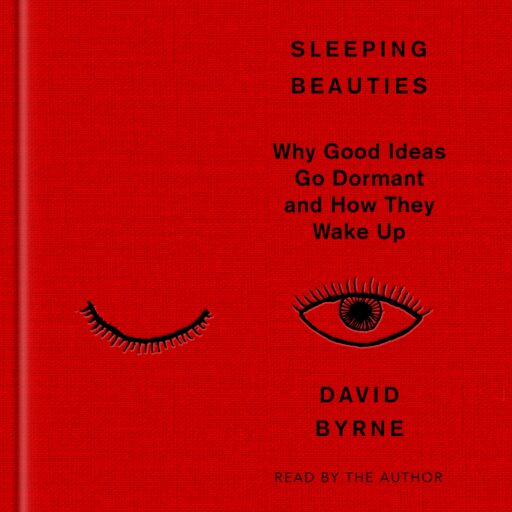
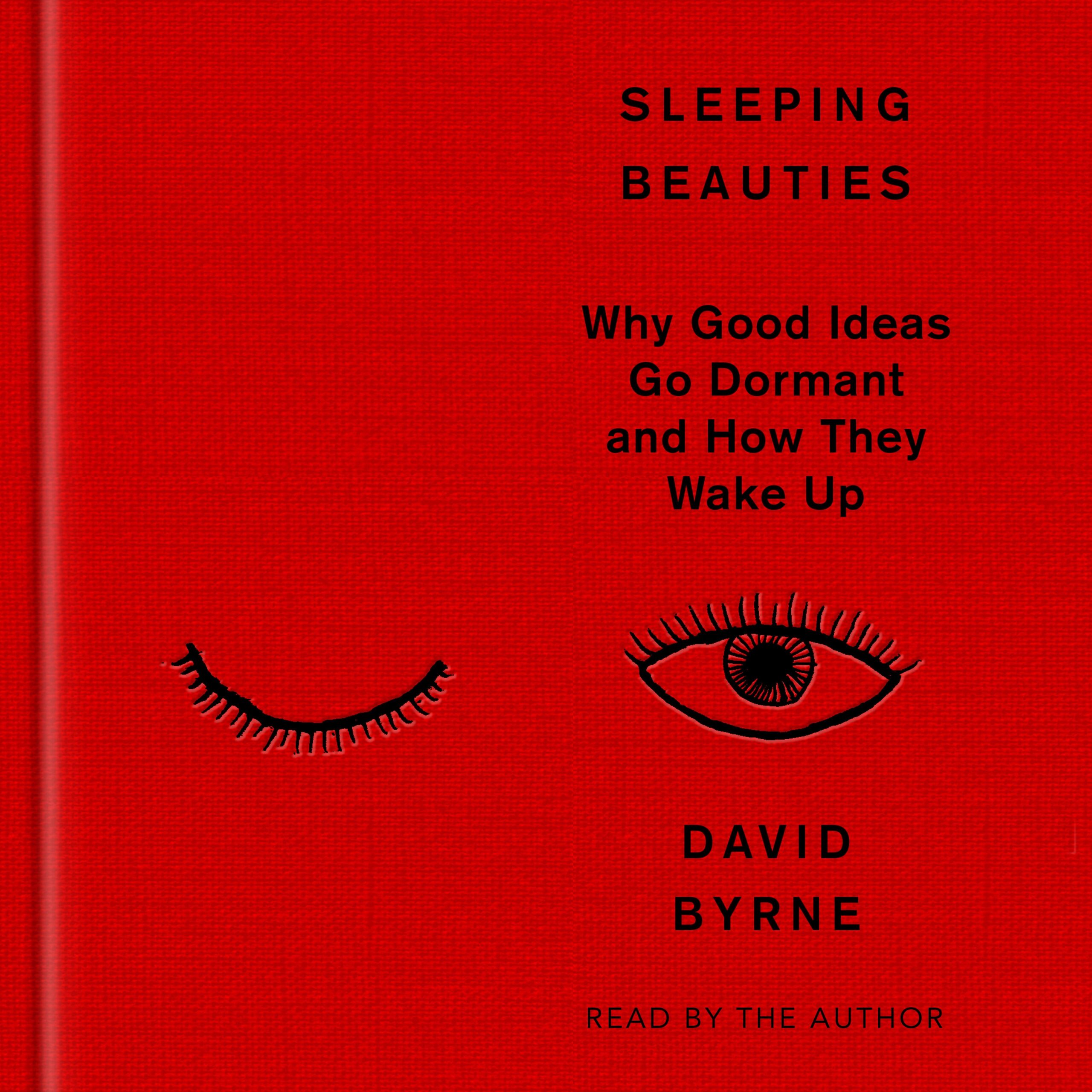
Sleeping Beauties Why Good Ideas Go Dormant and How They Wake Up
- 8 Oct 2026
- 9781805300540
- £26
- 400 pp
- 240×159mm
- 8 Oct 2026
- 9781837260133
- £20
- 416 pp
- 8 Oct 2026
- 9781837260126
- £34.99
- 12 hrs 42 min

In a few words
A riveting investigation into creative genius from the Talking Heads co-founder and author of How Music Works
In a few words
A riveting investigation into creative genius from the Talking Heads co-founder and author of How Music Works
In a few words
A riveting investigation into creative genius from the Talking Heads co-founder and author of How Music Works


Byrne guides us on a captivating quest to understand how we come to remember forgotten ideas, inventions and technologies. With striking dexterity and range, he explores how advocates reawakened Bach's compositions and Vermeer's paintings after one and two centuries of slumber; how technological advances rekindled theories of continental drift and black holes; how accidents resuscitated hand-washing and genetics; and how war renewed interest in the submarine and The Great Gatsby . . . He is acutely aware that there is no surefire formula for making ideas last or bringing them back to life. What he presents is far more valuable: a deeply researched, stimulating inspection of how the marketplace of ideas shifts, and what steps we can take to shift it. Sleeping Beauties belongs on the bookshelf of anyone who cares about creativity or culture
Adam Grant
New York TimesFascinating, unexpected and wonderful. I loved it
David Shrigley
Praise for How Music Works:
'Can alter how we look at ourselves and the world'
Brilliantly original
Praise for How Music Works:
'Can alter how we look at ourselves and the world'
Brilliantly original
More about
the book
An Instant New York Times Bestseller
‘A captivating quest to understand how we come to remember forgotten ideas, inventions and technologies . . . Sleeping Beauties belongs on the bookshelf of anyone who cares about creativity or culture’ —Adam Grant, New York Times
A ‘Sleeping Beauty’ is a brilliant idea that is ahead of its time. So many breakthroughs in arts or science were like this, lost on their initial audience and only later revived and acknowledged to be great. This book asks, why do some ideas fall asleep? And how do they wake up?
We love to believe in a meritocracy of ideas – that greatness is always recognised, innovation always seized upon and rewarded. Yet so many of the people we now recognise as the world’s great creators initially got little traction for their work. It was only later, often much later, that their work came roaring back to life and made a lasting impact.
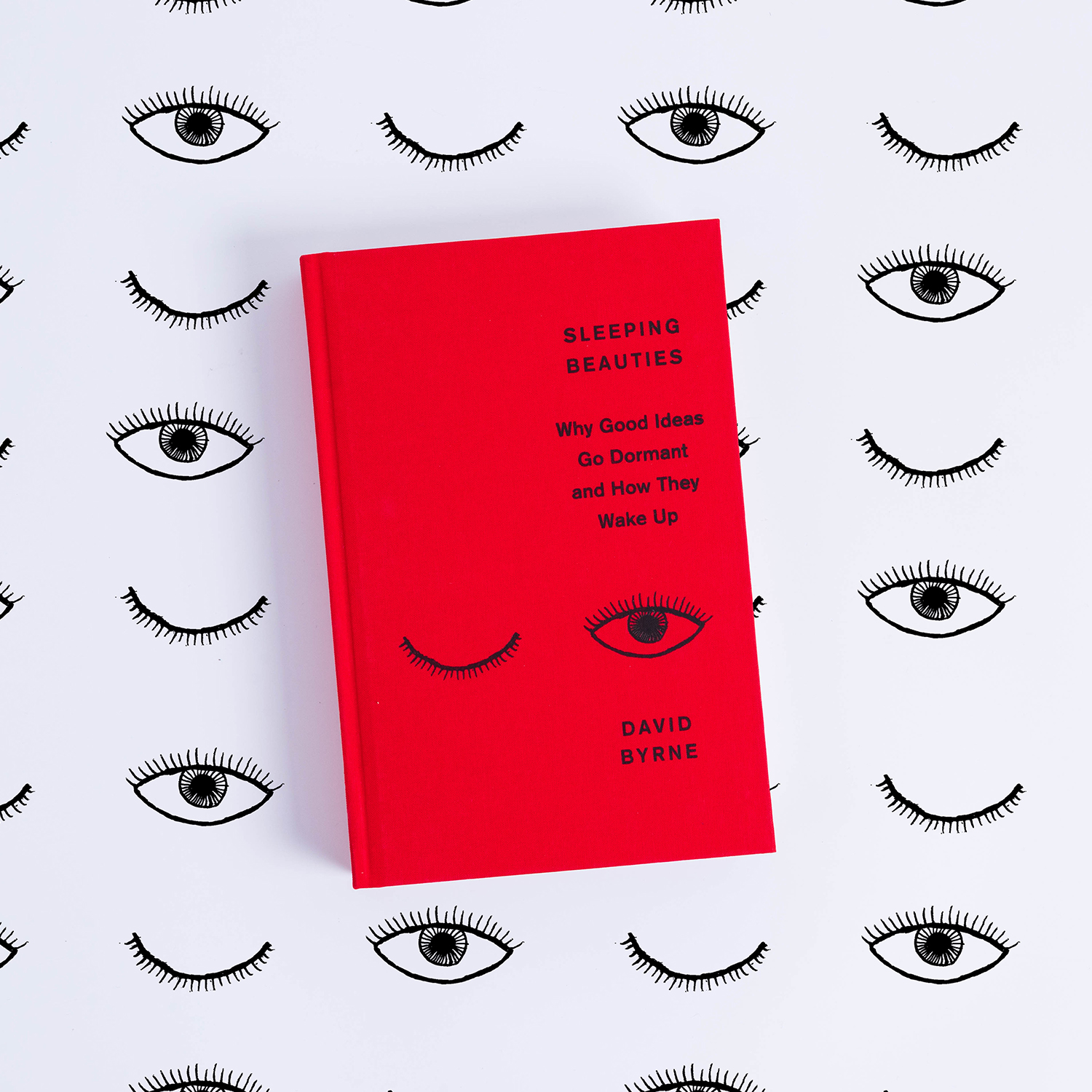
Discoveries as diverse as dark matter to continental drift, technologies from solar panels to the steam engine, artists from Brueghel to Vermeer to Melville all created ‘sleeping beauties’. Ranging across many centuries and the full scope of human endeavour, David Byrne explores their stories and gives us a lens for identifying future breakthroughs.
Humbling yet hopeful, these stories celebrate the courage to try new things and the wisdom to embrace them.
More about
the book
A ‘Sleeping Beauty’ is a brilliant idea that is ahead of its time.
So many breakthroughs in arts or science were like this, lost on their initial audience and only later revived and acknowledged to be great.
This book asks, why do some ideas fall asleep? And how do they wake up?
We love to believe in a meritocracy of ideas – that greatness is always recognised, innovation always seized upon and rewarded. Yet so many of the people we now recognise as the world’s great creators initially got little traction for their work. It was only later, often much later, that their work comes roaring back to life and made a lasting impact.
Discoveries as diverse as dark matter to continental drift, technologies from solar panels to the steam engine, artists from Brueghel to Vermeer to Melville all created ‘sleeping beauties’. Ranging across many centuries and the full scope of human endeavour, Byrne explores their stories and gives us a lens for identifying future breakthroughs.
Humbling yet hopeful, these stories celebrate the courage to try new things and the wisdom to embrace them.
A fascinating look at the way concepts from the worlds of art and science and philosophy can be forgotten for decades, centuries, even millenniums before being rediscovered through pure luck or the vagaries of a changing zeitgeist . . . Meticulously written and researched, and Byrne's passion for it is infectious
Part intellectual history and part treasure hunt, as well as a manifesto for keeping curiosity alive . . . Beneath Byrne’s restless eclecticism is a consistent argument: that our sense of what matters is never fixed
Johanna Thomas-corr
The TimesThere’s an international curriculum here that schools and universities would do well to champion: engage with science and with art, be open to play and to metaphor, consider all that is counterintuitive
Uplifting . . . A gorgeous exploration of ideas, art, invention and discoveries . . . He does it with such open-minded and infectious enthusiasm that it makes reading the book feel like you are taking part in the most wonderful conversation
Praise for How Music Works:
It was wildly ambitious to try and turn this galaxy of theory into a readable work of scholarship but Byrne has done it, and done it with style. Brian Eno might as well cancel that book deal now
An entertaining and erudite book . . . this is a serious, straight-forward account of an art from that also manages to be inspiring
Given the vastness of the subject, calling a treatise How Music Works seems intellectually arrogant, but it could also be seen as disarmingly frank, a fresh perspective from a down-to-earth mind. David Byrne's book, although a self-conscious art object (backwards pagination, upholstered cover and so on) contains plenty of plain-spoken, sensible observations: a dichotomy typical of the man

David Byrne
View profileDavid Byrne is a musician, performer, writer, and multidisciplinary artist who has captivated audiences since 1975, when he co-founded Talking Heads. Over the course of his career he has released more than 20 studio albums, scored films — most notably The Last Emperor, for which he received Academy Award, Golden Globe, and Grammy wins — and brought his singular vision to the stage, from the Broadway production American Utopia, which received a Special Tony Award and was adapted into a film directed by Spike Lee, to Here Lies Love, his disco musical that received four Tony Award nominations including Best Original Score, to Theater of the Mind, an immersive theatrical journey co-created with writer Mala Gaonkar. His visual art — including photography and installation works — has been exhibited internationally, and he is the founder of Reasons to Be Cheerful, an online publication devoted to solutions-based journalism. Byrne has published multiple books, including Bicycle Diaries, How Music Works, and Arboretum.
@DBtodomundo | @davidbyrneofficial


Featured in
these articles
In a rave review for the New York Times, Adam Grant says Sleeping Beauties by David Byrne is “a captivating quest to understand how we come to remember forgotten ideas, inventions and technologies.”