
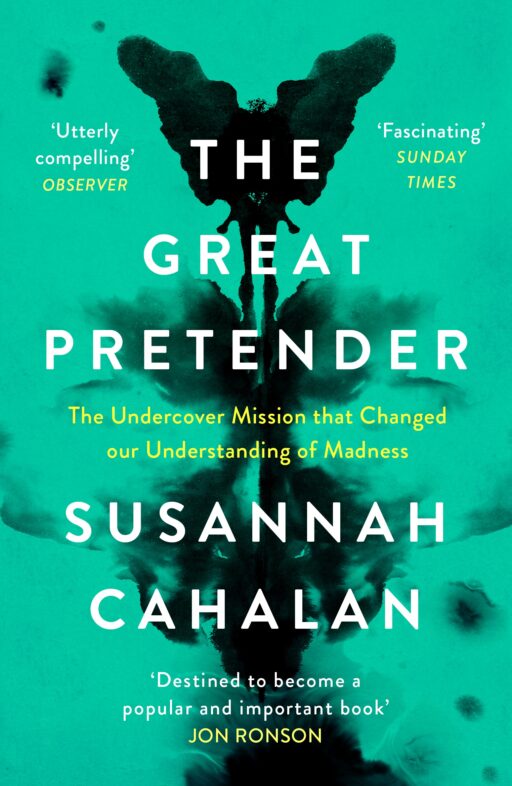
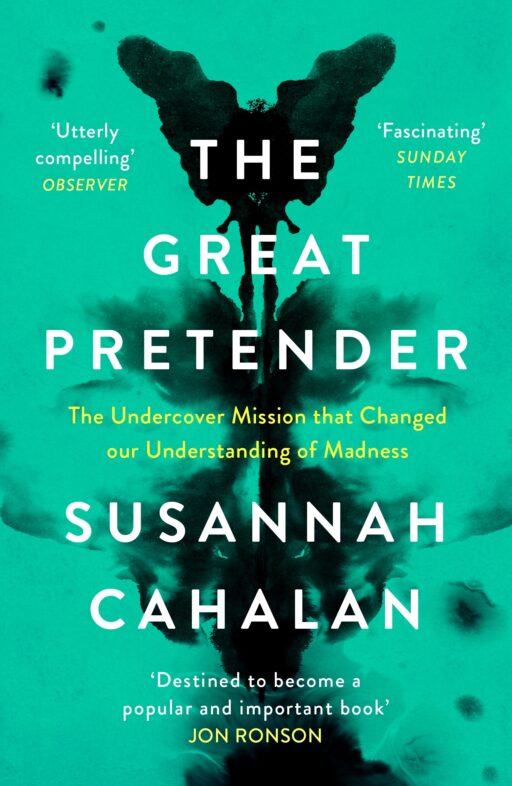
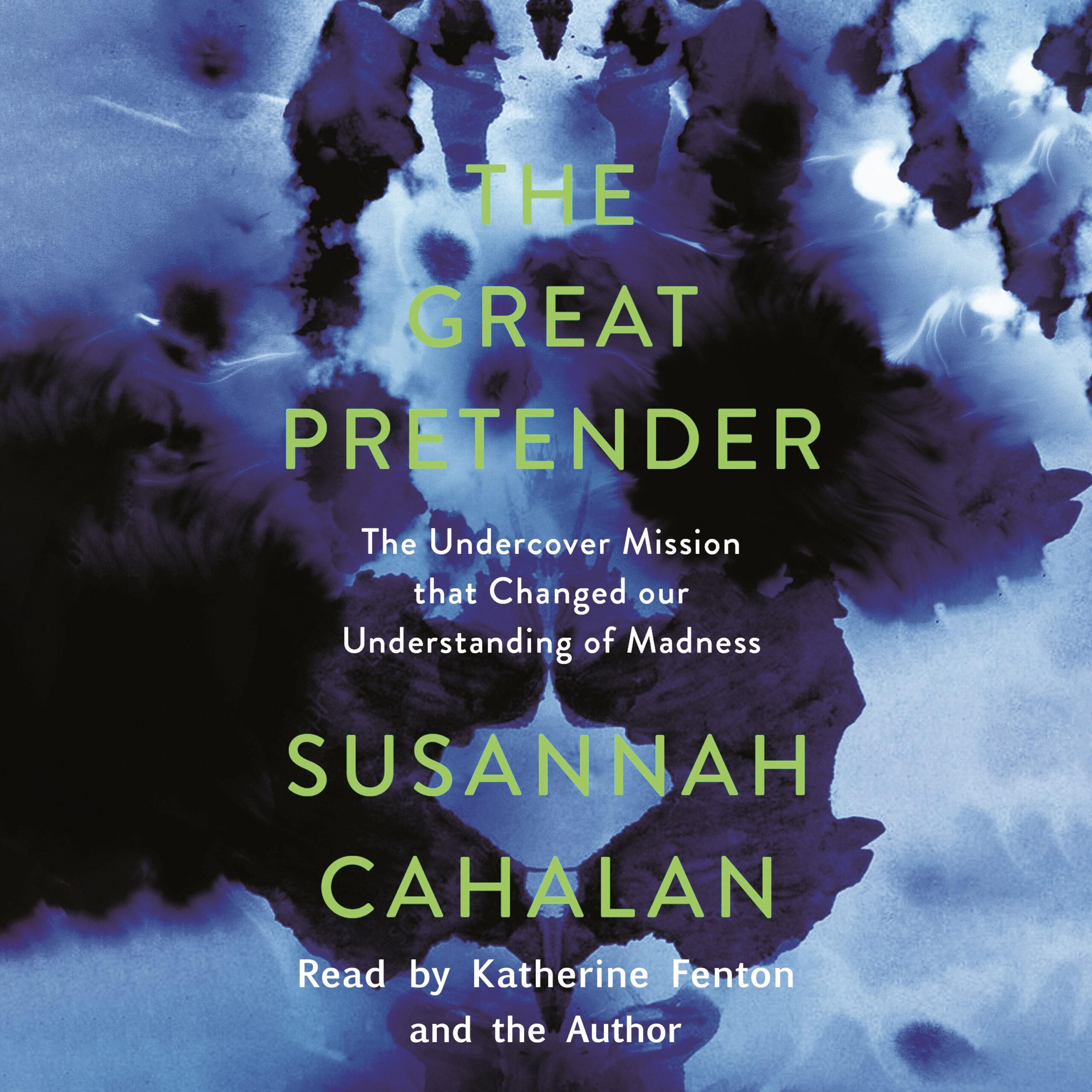
The Great Pretender The Undercover Mission that Changed our Understanding of Madness
- 16 Jul 2020
- 9781838851446
- £10.99
- 400 pp
- 129×198mm
- 2 Jan 2020
- 9781838851422
- £8.79
- 400 pp
- 2 Jan 2020
- 9781838851439
- £30
- 12 hrs 16 min

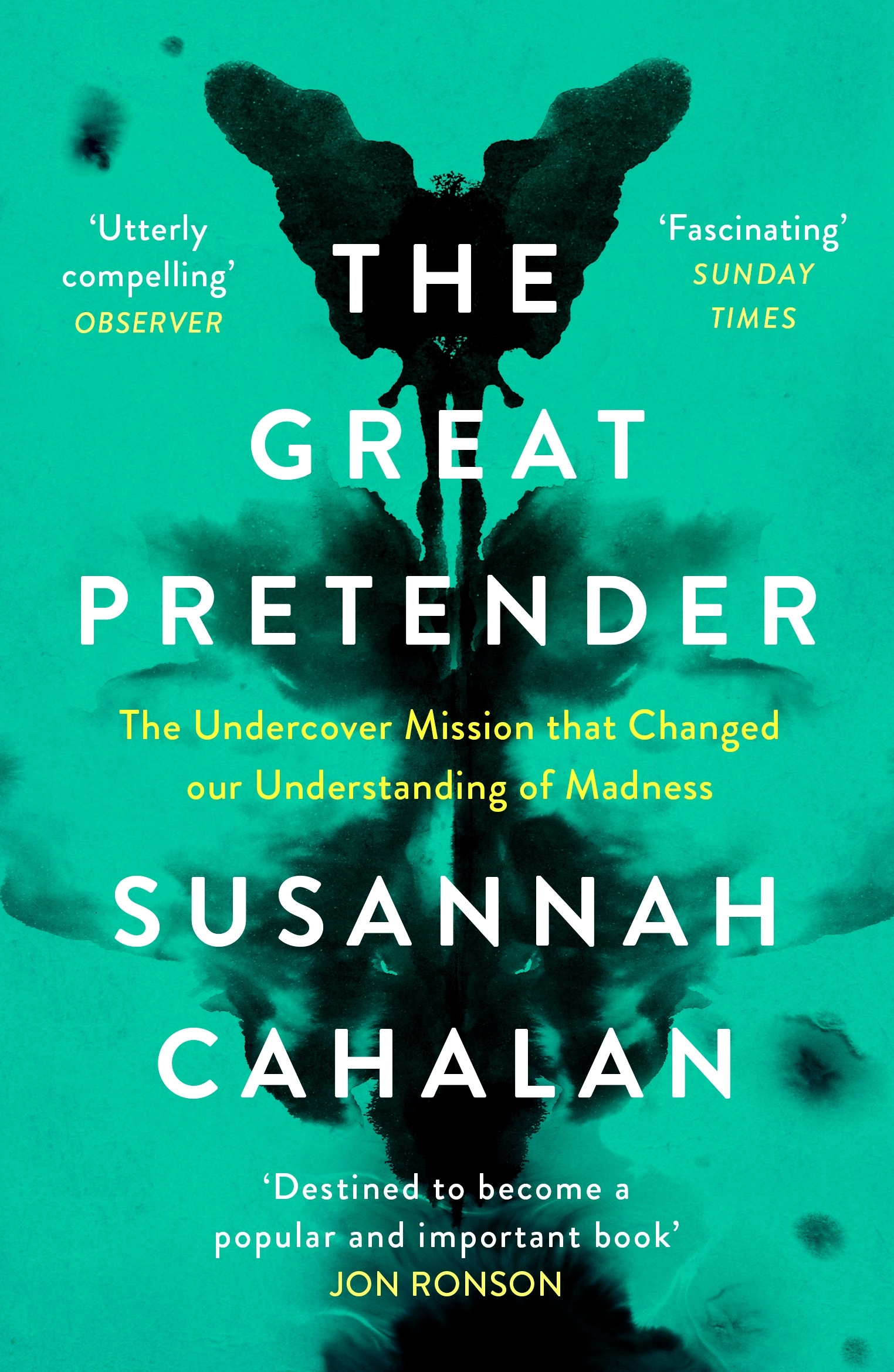
In a few words
From ‘one of America’s most courageous young journalists’ (NPR) comes a propulsive narrative history investigating the fifty-year-old mystery behind a dramatic experiment that changed the course of modern medicine
In a few words
From ‘one of America’s most courageous young journalists’ (NPR) comes a propulsive narrative history investigating the fifty-year-old mystery behind a dramatic experiment that changed the course of modern medicine
In a few words
From ‘one of America’s most courageous young journalists’ (NPR) comes a propulsive narrative history investigating the 50-year-old mystery behind a dramatic experiment that changed the course of modern medicine


People have asked me over the years: if they liked The Psychopath Test, what should they read next? I now have an answer. Susannah Cahalan’s The Great Pretender is such an achievement. It’s a wonderful look at the anti-psychiatry movement and a great adventure – gripping, investigative. It's destined to become a popular and important book
Jon Ronson
Utterly compelling . . . important and spirited
People have asked me over the years: if they liked The Psychopath Test, what should they read next? I now have an answer. Susannah Cahalan’s The Great Pretender is such an achievement. It’s a wonderful look at the anti-psychiatry movement and a great adventure – gripping, investigative. It's destined to become a popular and important book
Jon Ronson
Utterly compelling . . . important and spirited
People have asked me over the years: if they liked The Psychopath Test, what should they read next? I now have an answer. Susannah Cahalan’s The Great Pretender is such an achievement. It’s a wonderful look at the anti-psychiatry movement and a great adventure – gripping, investigative. It's destined to become a popular and important book
Jon Ronson
Utterly compelling . . . important and spirited
More about
the book
Shortlisted for the 2020 Royal Society Insight Investment Science Book Prize
Named a Best Book of 2020 by The Guardian * The Telegraph * The Times
In the early 1970s, Stanford professor Dr Rosenhan conducted an experiment, sending sane patients into psychiatric wards; the result of which was a damning paper about psychiatric practises. The ripple effects of this paper helped bring the field of psychiatry to its knees, closing down institutions and changing mental health diagnosis forever.
But what if that ground-breaking and now-famous experiment was itself deeply flawed? And what does that mean for our understanding of mental illness today? These are the questions Susannah Cahalan asks in her completely engrossing investigation into this staggering case, where nothing is quite as it seems.
More about
the book
‘Destined to become a popular and important book’ Jon Ronson
‘Fascinating’ Sunday Times
In the early 1970s, Stanford professor Dr Rosenhan conducted an experiment, sending sane patients into psychiatric wards; the result of which was a damning paper about psychiatric practises. The ripple effects of this paper helped bring the field of psychiatry to its knees, closing down institutions and changing mental health diagnosis forever.
But what if that ground-breaking and now-famous experiment was itself deeply flawed? And what does that mean for our understanding of mental illness today? These are the questions Susannah Cahalan asks in her completely engrossing investigation into this staggering case, where nothing is quite as it seems.
More about
the book
For centuries, doctors have struggled to define mental illness – how do you diagnose it, how do you treat it, how do you even know what it is? In search of an answer, in the 1970s a Stanford psychologist named David Rosenhan and seven other people – sane, normal, well-adjusted members of society – went undercover into asylums around America to test the legitimacy of psychiatry’s labels. Forced to remain inside until they’d ‘proven’ themselves sane, all eight emerged with alarming diagnoses and even more troubling stories of their treatment. Rosenhan’s watershed study broke open the field of psychiatry, closing down institutions and changing mental health diagnosis forever.
But, as Cahalan’s explosive new research shows, very little in this saga is exactly as it seems. What really happened behind those closed asylum doors, and what does it mean for our understanding of mental illness today?
Preface and Epilogue read by the author.
A fascinating piece of detection . . . passionate [and] a warning against easy answers
A well-crafted, gripping narrative that succeeds on many levels. Cahalan, who gained the trust of Rosenhan’s family, is meticulous and sensitive in her research; compelling and insightful in her writing. She accurately conveys the troubles that have haunted psychiatry over the past half-century . . . her book, which I hope wins awards, has immense value as a historical account
Brilliant detective work . . . fascinating
I wasn’t really prepared for the story Cahalan ends up telling. That she discovered the truth about Rosenhan is a testimony to her dogged research. That this truth was inconvenient for her own outlook on psychiatry is a compliment to her integrity. She writes it all very well too, with clarity, economy and style
A fascinating piece of detection . . . passionate [and] a warning against easy answers
A well-crafted, gripping narrative that succeeds on many levels. Cahalan, who gained the trust of Rosenhan’s family, is meticulous and sensitive in her research; compelling and insightful in her writing. She accurately conveys the troubles that have haunted psychiatry over the past half-century . . . her book, which I hope wins awards, has immense value as a historical account
Brilliant detective work . . . fascinating
I wasn’t really prepared for the story Cahalan ends up telling. That she discovered the truth about Rosenhan is a testimony to her dogged research. That this truth was inconvenient for her own outlook on psychiatry is a compliment to her integrity. She writes it all very well too, with clarity, economy and style
A fascinating piece of detection . . . passionate [and] a warning against easy answers
A vivid account . . . An impressive feat of investigative journalism – tenaciously conducted, appealingly written . . . as compelling as a detective novel
I wasn’t really prepared for the story Cahalan ends up telling. That she discovered the truth about Rosenhan is a testimony to her dogged research. That this truth was inconvenient for her own outlook on psychiatry is a compliment to her integrity. She writes it all very well too, with clarity, economy and style
A well-crafted, gripping narrative that succeeds on many levels. Cahalan, who gained the trust of Rosenhan’s family, is meticulous and sensitive in her research; compelling and insightful in her writing. She accurately conveys the troubles that have haunted psychiatry over the past half-century . . . her book, which I hope wins awards, has immense value as a historical account

Susannah Cahalan
View profileSusannah Cahalan is the award-winning, New York Times bestselling author of Brain on Fire: My Month of Madness, a memoir about her struggle with a rare autoimmune disease of the brain. She lives in Brooklyn.
@scahalan | susannahcahalan.com
Susannah Cahalan
View profileSusannah Cahalan is the award-winning, New York Times bestselling author of Brain on Fire: My Month of Madness, a memoir about her struggle with a rare autoimmune disease of the brain. She lives in Brooklyn.
@scahalan | susannahcahalan.com
Susannah Cahalan
View profileSusannah Cahalan is the award-winning, New York Times bestselling author of Brain on Fire: My Month of Madness, a memoir about her struggle with a rare autoimmune disease of the brain. She lives in Brooklyn.
@scahalan | susannahcahalan.com


