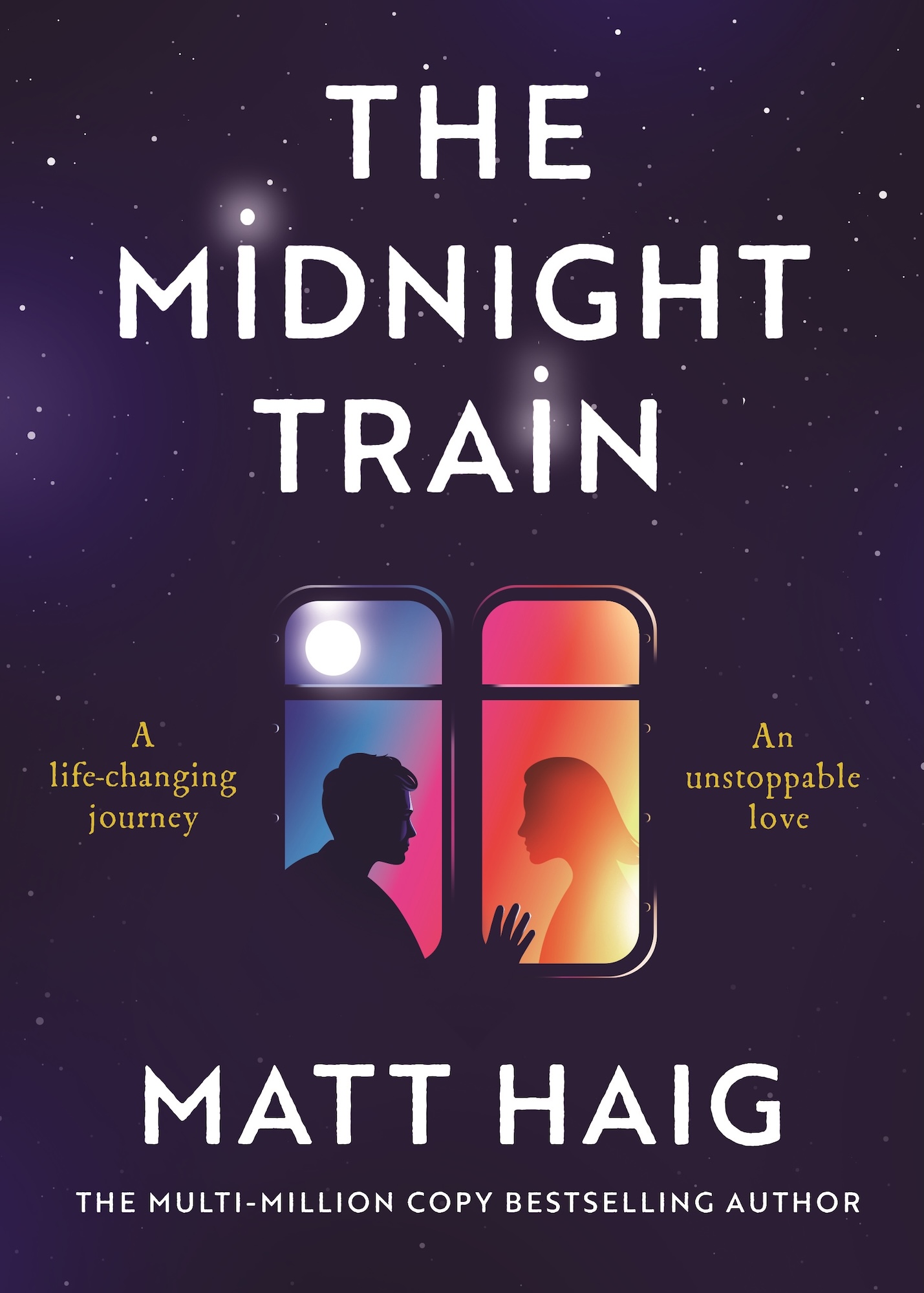
As the water taxi sped across the lagoon, the two young honeymooners gazed ahead in awe.
Wilbur squeezed Maggie’s hand and leaned into her as they sat at the back of the small boat, the sun glittering on the water in front of them.
‘I love you, Mr Budd,’ she told him, her words as natural as breath.
‘I love you too, Mrs Budd.’
Maggie laughed, softly, at how funny and official that sounded.
They held hands as the boat chugged its way towards the city, their fingers intertwined like tangled roots. The ninth of August 1974.
Wilbur turned away from the view in front of him, towards the person he had known since childhood.
‘We’ll always be like this, won’t we?’ Maggie asked him.
He smiled reassuringly. ‘Of course. Why wouldn’t we?’
They kissed as the lagoon merged into the Grand Canal. ‘I don’t know. Time changes things.’
‘But look at Venice. It’s not changed in hundreds of years. This could be 1574 just as easily as 1974.’
She looked over towards the city. ‘Aye. Let’s ignore time. Let’s be Venice.’
He watched as she held up her Pentax camera, a wedding present from her father, and aimed it towards the Doge’s Palace, its pink and white stone facade and intricate arches rising directly above the lagoon like a Byzantine fever dream.
‘For ever,’ added Wilbur, laughing.
She put a hand through his tousled hair, which was just about the longest it ever got to. ‘Yes, for ever and ever and ever . . .’
The boat slowed a little. ‘There,’ said the boatman, pointing towards a pretty but slightly decrepit terracotta building. ‘Hotel Proserpina.’
Wilbur and Maggie had never been abroad before, and the sight looked exotic and full of promise. And neither of them, at that moment, could see the figure watching from the shore, the one who looked so much like Wilbur himself that it would have been impossible to tell the difference.
An hour later they were sitting in easy silence drinking wine in the shade at a café by the Grand Canal, watching the city unfold.
Wilbur was wearing the same sandals, flared jeans and short-sleeved green shirt with large collars that he had worn on the plane, and Maggie was in her orange jumpsuit. He told her she looked like a film star and she told him to stop being corny but she smiled all the same.
A vaporetto full of tourists chugged by. Maggie began reminiscing about the wedding.
‘I’ve never seen your mam so happy,’ she said. ‘She didn’t mention . . .’ She paused, didn’t want to taint the moment.
‘Dougie? Aye, no. She didn’t. I’ve not seen Mam like that. Not since everything that happened. I think the gin had helped. Your dad too . . .’
‘Look at you,’ Maggie said, smiling under the sun’s glare.
‘Look at me, what?’
‘Sitting back in your chair like an emperor.’
‘I’m just happy.’
‘As you should be. You are on your honeymoon.’
Wilbur felt her study him a little closer.
‘You’re not thinking about the shop?’
He shook his head. ‘No, actually,’ he lied. Or half lied. ‘Not right now. I’m just thinking about you. And it’s quite an occupying thought . . .’
And it was really nothing at the time, this contentment. It flowed through their open fingers like a stream, and they imagined it would always be like this, and that the stream would never dry up. It would just flow and flow and they would never have to think about where it came from. And never make the effort to scoop it up and drink it in, as if life could stay a honeymoon for ever.
After the wine, they walked towards the church of St John the Almsgiver. Maggie playfully sang a snippet of her favourite song, ‘Bridge Over Troubled Water’, as they spied the Rialto Bridge in the distance.
They passed smart Italian couples. Open shirts and glamorous dresses. A busker playing the accordion. An old American man smoking a pipe and talking to a companion about jazz.
‘It feels so different, doesn’t it?’ Maggie observed.
She looked up and around. Absorbing the colours. Terracotta and pink, a dash of yellow, the deep blue shutters, everything in the sunlight looking like it had been brushed with honey.
‘Different to where?’
‘To everything we’ve ever known.’
He laughed. This was the very happiest he had ever felt. Happier than he once thought he could be, in the dark days. Just walking beside a canal, glancing at the woman he adored.
He turned to Maggie as she smiled a full-beam smile full of life. Her face was as open and pure as when he had first met her. And so was she. As tough as Sheffield steel and as warm as the sun. He was mesmerised by her. She could make him temporarily forget the wounds of his past and he hoped he did the same for her. He hadn’t wanted to fall in love with her, or anyone. Love was a dangerous thing. But now it had happened, he was grateful. He felt whole with her, like a question that had found its answer.
Wilbur stopped Maggie for a kiss as they were about to go up the steps of the Rialto Bridge.
‘We could move here,’ he said.
Then, a few minutes later, as they passed a bookstall on the bridge, ‘I could sell the shop.’
He was joking. They’d only just got there, after all. But also, in a way, he was being serious. Serious in the sense that he was connecting to something free and spontaneous inside him.
‘What would we do?’ Maggie asked, indulging the fantasy.
‘You could be an artist . . . or do art tours.’
‘And you could set up a little bookstall like that one back there on the bridge.’
It was then that Wilbur heard the whisper. Something up close in his ear. Cold breath.
You need to keep hold of this.
It caused Wilbur to brush his ear.
‘You all right, love?’ asked Maggie.
‘Oh, aye. Just a mosquito or something.’
And he thought nothing of it. Sometimes thoughts rang loud. That’s all it was.
He held Maggie’s hand, squeezed it. He felt a bit woozy and discombobulated amid the crowd in the heat, but still the happiest he’d ever been.
They kept walking, but there was quickly something else that captured Wilbur’s attention. Something that couldn’t be dismissed. Maggie gave him a concerned little look. Maybe she thought he was thinking of his brother. But no. Ahead of them under the portico, beside a little shop selling glass sculptures, there was a sight so odd it filled Wilbur with dread.
A man, rendered faintly in the air. Not transparent, but not fully there. It was the man who had watched them arrive, but this time he wasn’t unseen. A man who looked uncannily like Wilbur himself. A doppelganger. The same sandals, flared jeans, short-sleeved green shirt with large collars. The tousled hair and large sideburns. The lean, six-foot-one frame. The twenty-nine-year-old Wilbur of that August in 1974. The one with the world in his hands.
This other Wilbur seemed to notice that he had seen him, and waved, as if it was the most normal thing in the world. Wilbur raised his hand slightly.
‘Wilbur, you okay?’ asked Maggie, concerned.
He didn’t want to worry her. He shook his head. ‘Aye. Just going a bit mad in the heat.’
‘Come on, lad,’ she said, in an exaggeration of her own accent. ‘You need a nice spooky church and some Titian to gawp at.’
He laughed. But as he kept walking down the ramp, he heard something else.
A faint whistle, a rhythmical chugging.
Almost like a train leaving a station.
Excerpted from The Midnight Train by Matt Haig. Copyright © Matt Haig, 2026